To sell zines, first work out your cost per copy, then set a price that covers it: one-sheet mini zines often sell for $1–2 and half-letter zines for $3–6. Sell in person at zine fairs, place copies in independent shops on consignment (they usually pay you 50–70% of the cover price when a copy sells), list them in a simple online shop, and trade with other makers. Mail small zines flat with a card stiffener.
In this guide
A zine is finished when someone else reads it. Selling is only one way to get it there, and for most makers it is not the main one. This guide covers the practical side of all of them: pricing, trading, fairs, shops, distros, libraries, selling online and mailing, with the numbers you actually need.
Price it from the cost per copy
Most zines are priced to cover costs, not to make a profit. Start with what one copy costs you:
Cost per copy = (printed sides × price per side) + cover stock + staples or thread + bag or envelope
Then round up to a price that is easy to pay in cash. Common habits:
- One-sheet mini zines: $1–2, or free as a giveaway.
- Half-letter zines: $3–6, depending on page count, colour and binding.
- Bundles: three zines for a round number sells more copies than single sales.
- Pay what you can: a small sign saying so keeps zines open to everyone.
If you sell through shops, your shop price needs to be roughly double your total cost, because the shop keeps a share. The free edition checklist and cost sheet has a worksheet with a worked example. Printing costs are covered in the printing guide.
Trade: the oldest zine economy
Trading one zine for another is a core zine tradition, and often worth more than a sale because it builds your network.
- Say “trades welcome” on your back page and table sign if you mean it.
- At fairs, trade with your tablemates early in the day, before everyone is tired.
- By post, swap one for one, or arrange a bundle for a bundle.
- Keep a list of everyone you traded with. They are your first readers for the next issue.
Zine fairs
Zine fairs, zine fests and small-press or comics fairs range from a dozen tables in a library to events with thousands of visitors. They are the single best place to sell zines, meet makers and find readers.
Getting a table. Search “zine fest” or “zine fair” with your city or region. Applications often open two to four months before the event. Share a table with a friend to halve the fee and the nerves.
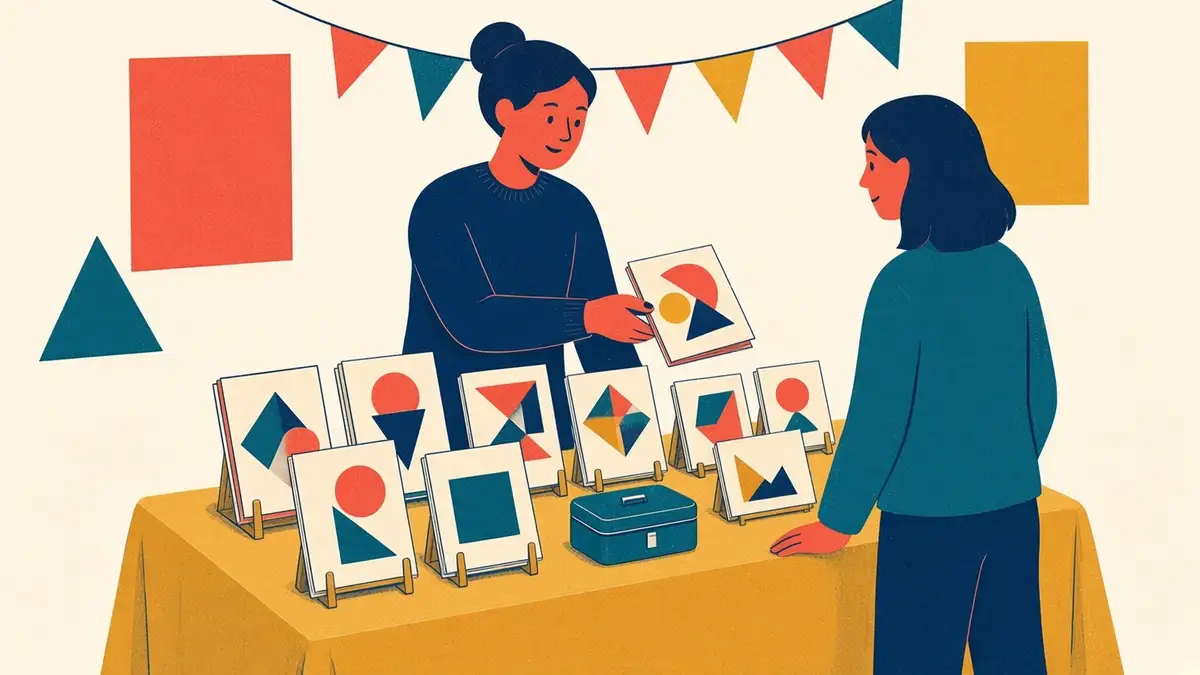
Setting up. Lay zines flat in a row with a price beside each one, put marked browse copies at the front so people can read without asking, and add a sign with your name or the zine’s title. Height helps: small stands or book easels make covers visible from the aisle.
What to bring. Counted zines boxed by title, browse copies, price cards, a tablecloth, a cash box with change, a card reader or printed payment QR code, a tally sheet, free mini zines or cards, tape and a stapler, bags, water, snacks and a warm layer. The full printable list is in the free fair packing list.
Shops and consignment
Independent bookshops, record shops, comic shops, cafés and gallery shops often sell local zines on consignment: they display your zines and pay you only for copies that sell, usually 50–70% of the cover price.
To approach a shop:
- Visit first and look at what they already stock.
- Bring a sample copy, a one-line description, the price and how many copies you can supply.
- Agree the split, how often they settle up, and what happens to unsold copies.
- Keep a simple record of where every copy is, and check in every few months.
Distros
A distro is a small distributor that sells zines by mail order or online, buying or consigning copies from makers. Many are run by one or two people for love. Send a sample with a short note, and respect their submission guidelines; they are not obliged to take every zine.
Libraries and archives
Many public, university and community libraries now collect zines, and some have dedicated zine libraries. Examples include the Barnard Zine Library in New York, the Denver Zine Library and the zine library at the Independent Publishing Resource Center in Portland.
- Ask about the library’s zine collection policy first.
- Offer two copies with a note giving the title, issue, date, your name or pen name, and permission to catalogue it.
- A zine in an archive becomes part of the record of a time and place. That is worth more than the cost of two copies.
Selling online
A simple online shop lets readers anywhere buy your zine. Etsy is widely used for zines; a free website shop or a payment link works too.
- Photograph the cover and one inside spread in daylight, on a plain background.
- List the size, page count, paper, binding and whether it is colour or black and white.
- State shipping costs clearly and ship promptly.
- Consider a free or pay-what-you-want PDF alongside the printed copy.
Mailing zines without overpaying
Postage can cost more than the zine. Mailing flat with a card stiffener keeps it cheap and safe.
In the US, as of USPS rules at the time of writing:
- Letters: up to 6⅛ × 11½ in, ¼ in thick and 3.5 oz. A quarter-letter or one-sheet zine with a card stiffener usually fits.
- Large envelopes (flats): up to 12 × 15 in, ¾ in thick and 13 oz. Half-letter zines go this way.
- Non-machinable surcharge: letters that are rigid, square or lumpy (a binder clip, a badge, a thick staple bulge) cost extra.
Postal rules and prices change and differ by country, so check with your postal service before a big mailing.
Giving zines away
Free copies are samples, and samples find readers. Leave a few in libraries, cafés, laundromats, record shops and community spaces that welcome them (ask first). Put a web address, handle or email on the back page so readers can find the next issue.
Growing a readership
- Keep a recognisable series. Same masthead, size and issue numbering, so readers spot issue two on a crowded table.
- Make following you easy. One address on every back page.
- Start an email list of readers who ask to hear about new issues. It outlasts any social platform. Ask permission before adding anyone.
- Share the making. Photos of folding, printing and stapling are more interesting to followers than the finished cover.
- Collaborate. Split zines, group zines and shared fair tables introduce you to each other’s readers.
- Teach. Running a free workshop at a library or school is one of the best ways to meet new makers. Our workshop lesson plan has you covered.
Go further
The free edition checklist, fair packing list and cost sheet put all of this on three printable pages. The Complete Zine Making Handbook ends with a full project for a fair-ready edition of 50: masters, copy-shop run, binding, pricing and the table itself.
Frequently asked questions
How much should I sell my zine for?
Start from your cost per copy and round up to a price that is easy to pay in cash. Common habits are $1–2 for a one-sheet mini zine and $3–6 for a half-letter zine, with bundles and a pay-what-you-can option. Check what similar zines cost at your local fair.
Can you make money selling zines?
Most zine makers aim to cover their costs rather than make a living. Zines can pay for themselves and fund the next issue, especially with fair sales, consignment and an online shop, but large profits are rare and not the point of the form.
Where can I sell zines?
At zine fairs and small-press or comics fairs, in independent bookshops, record shops and cafés on consignment, through zine distros, in an online shop such as Etsy or your own website, and by mail order to readers who find you.
How do I mail a zine cheaply in the US?
A quarter-letter or one-sheet zine usually mails as a standard letter if the envelope is no larger than 6⅛ × 11½ in, no thicker than ¼ in and no heavier than 3.5 oz. Larger zines go as flats, up to 12 × 15 in, ¾ in thick and 13 oz. Rigid, square or lumpy envelopes pay a non-machinable surcharge. Check current rules with USPS.
Do libraries accept zines?
Many public, university and community libraries collect zines, and some have dedicated zine libraries. Bring or send two copies with a note giving the title, date, your name or pen name, and permission to catalogue it, and ask the library about its collection policy first.